Friday, June 9, 2017
The content here at Jewelry-History.com, Jewels of Note, is supported by EraGem. EraGem is a fine estate jewelry company that specializes in vintage and antique engagement rings as well as other high-quality, previously-owned jewelry treasures, including the best Seattle Engagement Rings. The author of Jewels of Note, Angela Magnotti Andrews, has served as staff writer/editor at EraGem Post for over six years. EraGem Post also features Jewelry History, News, and Happenings.

Wednesday, August 13, 2014
The Human Form on This Nubian Necklace May Represent The Goddess Mut
 |
| Necklace with human and ram's head pendants 270 BC-320 AD, Gold and Carnelian Harvard University--Boston Museum of Fine Arts Expedition Photograph © Museum of Fine Arts, Boston |
This gold and carnelian necklace, an artifact from Ancient Nubia, is on view now at the Boston Museum of Fine Arts's newly opened exhibition Gold & The Gods: Jewels of Ancient Nubia. The necklace features 54 gold pendants molded into the forms of a ram's head resting against a human's head. The ram's head is most certainly a representation of the mighty god Amani, and the woman, wearing the White Crown of Egypt, is believed to represent the goddess Mut {3}.
In Nubian mythology, the goddess Mut forms a part of the triad associated with the near-monotheistic worship of the god Amani (Amun, Amen, Amon). In this trinity, Mut played the female counterpart to the male god of creation and life. Mut was worshiped as the mother of all life, and most especially as the mother of all Nubian rulers.
As is true on this necklace, Mut was often depicted either behind or alongside the ram's head characterization of Amani. In reliefs they were often pictured along with their son, Khonsu. Here, the two are depicted abutted beside each other on a necklace likely worn as a form of status and protection by a Nubian pharaoh during the Meroitic Period.
At that time, Mut was worshiped as a maternal figure, encompassing the grace and gentility of the feminine form, as well as the fierceness of a protective lioness (possibly highlighted by the choice of red carnelian beads as spacers between her crowns). Both she and Amani were considered as the very foundation on which the pharaohs drew their source for power and strength. They were believed to inspire their births, protect their lives, and empower their reigns.
Mut's eyes were favorable toward the king and against his (or her) enemies. To those she favored, she offered solace beneath her mighty wings, protecting her beloved from gods and men alike. To those she stood against, she was a fiery judge, demanding at times the burning bodies of her enemies upon her pyre.
This necklace, most likely worn by a pharaoh, would have offered more than a reminder to the wearer that his Divine Mother was ever watching out for him, just as she was often shown raising a hand of protection over her husband, Amani, and her son, Khosun.
For more information or to view this necklace in person, you can click on the MFA's website for details. The show is currently on view in the Rita J. and Stanley H. Kaplan Family Foundation Gallery (#104).
BIBLIOGRAPHY
1. Hays, Christopher B. Death in the Iron Age II and in First Isaiah. Tubingen, Germany: Mohr Siebeck, 2011.
2. Lobban, Jr., Richard A. Historical Dictionary of Ancient and Medieval Nubia. New York: Scarecrow Press, 2003.
3. Markowitz, Yvonne J. and Denise M. Doxey. Jewels of Ancient Nubia. Boston: MFA Publications, 2014.
*Clip art courtesy of The Graphics Fairy
Saturday, August 9, 2014
Theda Bara Hated Diamonds
 |
| Theda Bara in Carmen, 1915 Public Domain |
Taking her cues from alluring stage actresses, Mata Hari and Sarah Bernhardt, Theda Bara brought America's favorite bad girl to the silver screen--"a sultry, exotic, erotic woman who went through the world leaving broken men in her wake. {3} Having made her debut in film in her thirties, this late bloomer appears to have come into her own at just the right time.
The age of advertising was dawning, and Ms. Bara's keen study of some of the stage's most alluring seductresses, coupled with a talented group of publicists, allowed her to enter stage left out of nowhere and shine. Her stage career was mediocre at best, but her embodiment, both on and offscreen, of the ever-popular vampiress launched her into stardom.
Her kohl-lined eyes simmered, and her publicists made sure that even those who knew they were being conned believed she was a "deadly...crystal gazing seeress of profoundly occult powers, wicked as fresh red paint and poisonous as dried spiders." {7} According to Terry Ramsaye, the escalating rumors (all manufactured by Fox's best publicists) of her nefarious background caused little girls to swallow "their gum with excitement," while big movie men balked at the thought of meeting her in private. {7}
So pervasive were these stories about her that even today rumors abound about her. One such rumor involves jewelry. In searching for information on Ms. Bara's engagement ring, this writer came across a statement made by a contender in the diamond industry. They wrote as fact that Ms. Bara disliked diamonds and said so on many occasions. Instead, she opted to wear only an ancient emerald ring and a talismanic turquoise ring.
This reported hatred for diamonds rings true for The Vamp, a role Ms. Bara threw herself into with abandon for four years. The story of her "odd ornaments" is found in a Toledo newspaper dated April 7, 1916. {1} Even at the time, it was largely understood that anything written in the newspapers about "The Wickedest Woman in the World" was generated in part, or in whole, by Fox's publicists Al Selig and Johnny Goldfrap.
Her emerald ring, they wrote, was a gift she received from a blind sheikh she encountered in the Orient. He supposedly gave her the ring, an heirloom which had been in his family for 2,000 years, on the condition that she would pass it on to her first-born son. By accepting the auspicious gift, she was honor-bound to teach this future son Arabic.
The turquoise ring, said to have been oval-shaped, is even harder to pin down. Supposedly, she wore it in every one of her movies, either on her finger or concealed in her clothing, but even when she wore rings on her fingers in photos, they were rarely oval-shaped turquoises. {7}
Oddly, no mention of these important jewels was mentioned in the papers in 1957, the year her jewelry collection, valued at $100,000, was sold at auction. The United Press reported that the top bid of $9,250 was paid for a platinum bracelet set with 30 carats of diamonds and six carats of emeralds. That's a lot of diamonds for a woman who hated them!
In truth, the Theda Bara of the Silver Screen was a complete fabrication. Indeed, a deeper look at her history demonstrates that these supposed signature jewels were as real as the persona for which they were manufactured.
BIBLIOGRAPHY
1. Bernstein, Matthew and Gaylyn Studlar. Visions of the East: Orientalism in Film. London: I. B. Tauris and Co. Ltd., 1997.
2. Bonhams. "A Century of Movie Magic at Auction as curated by Turner Classic Movies." November, 2013.
3. DiGrazia, Christopher. "Theda Bara: An essay to accompany the Tambakos Silent Film Series: A Fool There Was (1915), Kiss Me My Fool website, October 24, 2007.
4. Genini, Ronald. Theda Bara: A Biography of the Silent Screen Vamp, with a Filmography. Jefferson, NC: McFarland & Company, Inc., 1996.
5. IMDb. "Theda Bara, Biography." Accessed August 7, 2014. http://www.imdb.com/name/nm0000847/bio?ref_=nm_ov_bio_sm.
6. Petersen, Anne Helen. "Scandals of Classic Hollywood: The Most Wicked Face of Theda Bara, The Hairpin, January 8, 2013.
7. Proddow, Penny and Debra Healy and Marion Fasel. Hollywood Jewels: Movies, Jewelry, Stars. New York: H.N. Abrams, 1992.
8. Ramsaye, Terry. A Million and One Nights: A History of the Motion Picture. Abingdon, Oxon: Frank Cass & Co., Ltd., 2012.
9. Silentmoviequeen. "Theda Bara Biography," YouTube video, published July 11, 2012. https://www.youtube.com/watch?v=F8ejQVRW0ts. 10. "Theda Bara Jewelry Goes to Highest Bidder," Eugene Register-Guard, May 2, 1957, p. 4D.
*Clip art courtesy of The Graphics Fairy
Introducing Gemstone Legends
 |
| Victorian Era Jelly Opal Locket Photo ©2014 EraGem Jewelry |
Modern technology and observable science in the west have shattered many of the superstitions related to gemstones. In our day, the rise or fall in market value has more to do with rarity, means of acquisition, and intrinsic value than whether it will bring good or ill fortune to its wearer.
While provenance continues to play a significant role in the value of a jewel, the stories and beliefs that followed that jewel through history are largely dismissed as silly superstitions or embellished legends. It is difficult for the western mind to enter into the rich depths of a gemstone's legacy. To abandon our rational mind and step into the shoes of someone who really didn't "know" better is difficult at best, impossible at worst.
To our way of thinking, our forefathers reasoned more like wonder- or fear-filled children, attaching innumerable associations to events, reaching the absurd conclusion that the presence or absence of a gemstone might have influenced a buffalo hunt, the birth of a state, or the Black Plague.
Yet, despite 'knowing better,' we are often haunted by the legends of the ancients. We are intrigued by the possibility that perhaps in our rational world we might be missing something that our ancestors understood.
Of course, we can't go back, nor would we want to. Ignorance, contrary to the popular cliche, really is not bliss. Whatever ills and trials forward progress creates, few of us would trade the calamities of our western world for the savage lessons our ancient forebears learned on our behalf.
But what if we could go back, just in our imaginations, and really feel what they felt, understand things the way they understood them, and see the world through their eyes--even for a few moments?
What if, by placing ourselves in their shoes just for a few minutes, we could bring some of their wonder back into our century?
What if we could enjoy just a touch of the magic they must have felt when they first laid eyes on a brilliant diamond or a flashing opal?
In order to help us enter in, I'm collecting some of the best stories associated with gemstones. I'll be building this slowly over time. If you come across a moving story about the earth's treasures, I invite you to leave a comment. Your suggestion might just find its way to the Jewels of Note Gemstone Legends page.
Wednesday, August 6, 2014
A Nubian Necklace with Golden Human and Ram's Head Pendants
|
| Necklace with human and ram's head pendants 270 BC-320 AD, Gold and Carnelian Harvard University--Boston Museum of Fine Arts Expedition Photograph ;© Museum of Fine Arts, Boston |
This gold and carnelian necklace, fashioned out of 54 individual gold pendants in the image of a ram's head juxtaposed with that of a human's head, is on view now at the Boston Museum of Fine Arts. Part of their newly opened Gold & The Gods exhibition, this is a stunning example of the nearly 100 pieces of Nubian jewelry on display from now until May 2017.
The pendants are strung neatly on a double-strand of some kind of floss or string, perhaps sinew, with spherical beads of carnelian used as spacers between the conical hats worn on the human head portions of the gems. According to the exhibition catalog, these pendants are three-dimensional figures modeled in gold that have been soldered to a flat sheet-metal backing.
The human form is that of a woman wearing what appears to be the White Crown associated with Egyptian kings. The ram's heads wears a double uraeus and a sun disk, Nubian and Egyptian symbols of royal power and supreme sovereignty. The curators of the MFA exhibition have proposed the female form may be that of the goddess Mut, while the ram's head is associated with the god Amani (Amun, Amen).
For more information or to view this necklace in person, you can click on the MFA's website for details. The show is currently on view in the Rita J. and Stanley H. Kaplan Family Foundation Gallery (#104).
BIBLIOGRAPHY
1. Kjeilen, Tore. "Amon." LexicOrient (LexLook Encyclopedia). Accessed August 1, 2014. http://looklex.com/e.o/amon.htm.
2. LaChiula, Charles. "Uraeus." Illustrated Dictionary of Egyptian Mythology. Buffalo Architecture and History, 2009.
3. Markowitz, Yvonne J. and Denise M. Doxey. Jewels of Ancient Nubia. Boston: MFA Publications, 2014.
*Clip art courtesy of The Graphics Fairy
Friday, August 1, 2014
The Nubian Ram God Amani is Associated with Life
|
| Necklace with human and ram's head pendants 270 BC-320 AD, Gold and Carnelian Harvard University--Boston Museum of Fine Arts Expedition Photograph © Museum of Fine Arts, Boston |
This gold and carnelian necklace, an artifact from Ancient Nubia, is on view now at the Boston Museum of Fine Arts in their current exhibition, Gold & The Gods: Jewels of Ancient Nubia. The necklace features 54 gold pendants molded into the forms of a woman wearing the White Crown of Egypt and a ram's head wearing a double uraeus and sun disk. The ram's head is most certainly a representation of the mighty god Amani.
In Nubian and Egyptian mythology, Amani was considered the creator of all life, and eventually, in Nubia, he became associated with the birth of all rulers and even the other gods in their pantheon. At some point, the Egyptians came to believe that Amen originated on a small mountain, Gebel Barkal (Jebel Barkal), in Nubia (what is now Northern Sudan).
As time went on, it was believed that Amen came to Nubian queens in human form and impregnated them with divine rulers. These sons and daughters became the queens and kings of Nubia, and many took some form of Amani's name. Examples include, King Amaninatakelebte (r. 538-519 BC), King Talakhamani (r. 435-431 BC), and Queen Amanishakheto (ruler in the late 1st century BC).
It is supposed that this necklace, and many others like it, was worn by Nubian pharaohs. Like their Egyptian contemporaries, the Nubians were cultured and sophisticated in the art and strategies of war. However, they were also superstitious. These necklaces not only served as status symbols, but likely also as amulets. It was their belief that wearing the gods on their persons afforded them the power of their presence and protection.
For more information or to view this necklace in person, you can click on the MFA's website for details. The show is currently on view in the Rita J. and Stanley H. Kaplan Family Foundation Gallery (#104).
BIBLIOGRAPHY
1. Bianchi, Robert Steven. Daily Life of the Nubians. Westport, CT: Greenwood Publishing Group, 2004.
2. Emory/Michael C. Carlos Museum. "A Necklace Fit for a King." Accessed August 1, 2014. http://carlos.emory.edu/ODYSSEY/Teachers/ll/Ancient_Egypt_lesson_plan/Rams_Head_Necklace_Lesson.pdf.
3.Kjeilen, Tore. "Ancient Nubian gods." LexicOrient (LexLook Encyclopedia). Accessed August 1, 2014. http://i-cias.com/e.o/nubia_rl_gods.htm.
4. LaChiusa, Chuck. "Uraeus." Illustrated Dictionary of Egyptian Mythology. Buffalo Architecture and History Website, 2009.& http://buffaloah.com/a/archsty/egypt/illus/illus.html#Uraeus.
5. Markowitz, Yvonne J. and Denise M. Doxey. Jewels of Ancient Nubia. Boston: MFA Publications, 2014.
6. Museum of Fine Arts Boston. "Gold and the Gods: Jewels of Ancient Nubia to go on view at the Museum of Fine Arts, Boston," Press Release, June 23, 2014.
*Clip art courtesy of The Graphics Fairy
Thursday, July 24, 2014
The Divine Colors of Hathor
 |
| Bracelet with Image of Hathor, 100 BC Harvard University--Boston Museum of Fine Arts Expedition Photograph © Museum of Fine Arts, Boston. Used with permission. |
This ancient artifact is on display as part of newly opened exhibition, Gold and the Gods: Jewels of Ancient Nubia, on view at the Museum of Fine Arts (MFA) in Boston. The bracelet was fashioned during the Meroitic period of Nubia's history, probably around 100 BC.
Decorated with exquisite gold work and stunning enamel work, this bracelet features the goddess Hathor (Isis), who serves as the great mother goddess of Ancient Egypt and Nubia. Here she is depicted in gold, seated on a throne and wearing a sun disk with two cow horns and a rearing cobra, which symbolizes royalty and/or divine authority.
She is set in relief against a dark blue background, a supremely preserved example of the Nubian mastery of enameling. This portion of the bracelet was made out of soda-lime glass of unknown origins, tinted with a slight bit of cobalt to attain the deep blue coloring.
The aqua-colored and red-violet sections of the bracelet show more wear, making analysis difficult. Manganese and copper tint the purplish-red areas, a color not typically seen in Nubian pieces. The aqua color, as seen on this and other pieces from this time period, was likely dyed with manganese, cobalt, copper, and a high level of iron. {4, p.150}
These colors were more than decorative. Every god and goddess was associated with different colors. Hathor (also called Isis) was represented by the colors green, blue, and black. {2} Both black and green were associated with everything we now attribute to the color green--life, renewal, growth, and the earth's plant life. {2} Blue was connected to the waters and the heavens, and since Hathor was revered as the mother of all life, it makes sense that her colors would be both earthly and divine.
The red color represents the counterpoint to Hathor's rich contribution to earth. Associated in Ancient Egypt with the color of the desert, red represents the chaos and disorder waiting around every corner.
It sometimes represented death, infertility, and destruction. {1} However, being the color of blood, red might also represent life and protection. {1} It was commonly used to decorate protective amulets, which this bracelet may have been for someone at one time.
To view this spectacular specimen up close, you need only visit the MFA during their open hours between now and May 14, 2017. Details are available on the MFA's website.
BIBLIOGRAPHY
1. About.com African History. "Red Colors in Ancient Egypt." Accessed July 17, 2014. http://africanhistory.about.com/od/egyptology/ss/EgyptColour_6.htm.
2. Isidora. "Is Isis a Black Goddess?" Isiopolis Blog, December 2, 2011. http://isiopolis.com/2011/12/02/is-isis-a-black-goddess/.
3. Markowitz, Yvonne J. and Denise M. Doxey. Jewels of Ancient Nubia. Boston: MFA Publications, 2014.
4. Museum of Fine Arts, Boston. "Gold and the Gods: Jewels of Ancient Nubia." Accessed July 17, 2014. http://www.mfa.org/exhibitions/gold-and-gods.
*Clip art courtesy of The Graphics Fairy
Thursday, July 17, 2014
A Nubian Gold Bracelet Bearing the Image of the Goddess Hathor
 |
| Bracelet with Image of Hathor, 100 BC Harvard University--Boston Museum of Fine Arts Expedition Photograph © Museum of Fine Arts, Boston. Used with permission. |
This weekend, you can view this stunning ancient artifact in the upcoming exhibition, Gold & The Gods: Jewels of Ancient Nubia. The show opens Saturday, July 19, 2014, at the Museum of Fine Arts (MFA) in Boston.
Ancient Nubia (now Sudan) served as the epicenter for gold to the Egyptians, Greeks, and other early Mediterranean civilizations. The exhibition will feature 100 glittering treasures, including this gold bracelet featuring an array of sophisticated techniques in gold and enamel. Front and center is a representation of the goddess Hathor, worshiped for her embodiment of love, fertility, motherhood, and music. {4, p112}
Here she is depicted in gold, seated on a throne and wearing her usual headdress, a sun disk with two cow horns and a uraeus, the rearing cobra which connotes royalty and/or divine authority. In her hand she holds a staff which has as twin end pieces a pair of ankhs, symbols of Life.
Hathor is set in relief against a dark blue background, a supremely preserved example of the Nubian mastery of enameling. Though the surface has thinned over time, the original composition of the glass they used is "nearly unaltered." {4, p.150}
This important Nubian bracelet was discovered within a pyramid in Gebel Barkal during the joint archaeological expedition conducted between 1905 and 1942, by Harvard University and the MFA Boston. This exhibit will be on extended view from July 17, 2014 through May 14, 2017. More information is available on the MFA's website.

BIBLIOGRAPHY
1. About.com African History. "Red Colors in Ancient Egypt." Accessed July 17, 2014. http://africanhistory.about.com/od/egyptology/ss/EgyptColour_6.htm.
2. Isidora. "Is Isis a Black Goddess?" Isiopolis Blog, December 2, 2011. http://isiopolis.com/2011/12/02/is-isis-a-black-goddess/.
3. Markowitz, Yvonne J. and Denise M. Doxey. Jewels of Ancient Nubia. Boston: MFA Publications, 2014.
4. Museum of Fine Arts, Boston. "Gold and the Gods: Jewels of Ancient Nubia." Accessed July 17, 2014. http://www.mfa.org/exhibitions/gold-and-gods.
*Clip art courtesy of The Graphics Fairy
Friday, March 22, 2013
Kate Middleton's Understated Style
 |
| Kate Middleton (detail) by Paul Emsley, 2012. Photo Source: Big Think |
I have scanned hundreds of portraits, looking for those that jump out as my favorites for the Jewelry in Portraits series. Unfortunately, so many amazing portraits portray very little in the way of jewels.
Having little to no jewelry to talk about renders most of these otherwise gorgeous portraits unacceptable choices. However, after seeing this portrait of HRH the Duchess of Cambridge, realizing that the scant jewelry she wears is actually indicative of her elegant and understated style, I concluded that I could most definitely highlight her jewelry, or rather the absence thereof.
This is a groundbreaking portrait, one worth documenting in a slightly different light than has been done in the media since it was first displayed on January 11, 2013. The Duchess of Cambridge has a natural beauty that hardly needs enhancement, so that her one visible sapphire and diamond earring is all the more stunning against her chestnut locks.
This particular earring has enormous sentimental value to her and to her husband, and it matches perfectly the only other jewelry I am absolutely certain that she is wearing just out of view in this portrait—her sapphire and diamond engagement ring, nestled against her wedding band made of 18k Welsh gold.
Both pieces of jewelry were gifts from her husband, Prince William, who gave them to her because both Kate and the jewels are “very special to him.” {6} The ring and the earrings were among his mother’s favorite pieces, and he wanted his wife to have these precious heirlooms as a way to honor his mother’s life and somehow include her in the happy event of their wedding. {1; 13}
Originally in the form of heavy sapphire studs with diamond halos, Princess Diana’s white gold earrings were altered for Catherine Middleton into a drop style with the large sapphire cabochon, surrounded by nine round brilliant diamonds, suspended from a single diamond stud. Her engagement ring mirrors this design, featuring “a large oval sapphire surrounded by 14 round diamonds set in 18k white gold.” {3, 4}
BIBLIOGRAPHY
1. Boniface, Susie. “Kate Middleton given Diana’s favourite earrings by Prince William.” Mirror News. July 24, 2011. Accessed January 31, 2013. http://www.mirror.co.uk/news/uk-news/kate-middleton-given-dianas-favourite-143487.
2. Cruz, Debbie. “Kate Middleton’s jewelry in 2012 (Photos).” Examiner. December 25, 2012. Accessed January 31, 2013. http://www.examiner.com/article/kate-middleton-s-jewelry-2012.
3. Diana’s Jewels. “Earrings Catherine.” Accessed January 31, 2013. http://www.dianasjewels.net/earringscatherine.htm.
4. Diana’s Jewels. “Rings Catherine.” Accessed January 31, 2013. http://www.dianasjewels.net/ringscatherine.htm.
5. English, Rebecca. “I’m thrilled! Kate puts on a brave face as she sees first official portrait critics are calling ‘rotten’.” DailyMailOnline. January 11, 2013. Accessed January 31, 2013. http://www.dailymail.co.uk/news/article-2260655/Kate-Middleton-Rotten-official-portrait-Duchess-Cambridge-artist-Paul-Emsley-unveiled.html?ITO=1490&ns_mchannel=rss&ns_campaign=1490.
6. English, Rebecca. “What’s in a ring? Palace confirms that Prince William will not be wearing a wedding band when he marries Kate Middleton.” DailyMailOnline. March 31, 2011. Accessed January 31, 2013. http://www.dailymail.co.uk/femail/article-1372078/Royal-wedding-Palace-confirms-Prince-William-wont-wear-ring-marries-Kate-Middleton.html.
7. Faiola, Anthony. “In uproar over portrait of Duchess of Cambridge, its artist speaks out.” The Washington Post. January 31, 2013. http://www.washingtonpost.com/world/europe/in-uproar-over-duchess-of-cambridge-portrait-its-artist-speaks-out/2013/01/31/cbe0eff4-6bc4-11e2-8f4f-2abd96162ba8_story.html.
8. Murray, Rheana. “Kate Middleton’s first official portrait revealed: Painting of Duchess of Cambridge met with mixed reaction.” New York Daily News. January 11, 2013. http://www.nydailynews.com/entertainment/gossip/kate-middleton-official-portrait-revealed-article-1.1238145.
9. National Portrait Gallery. “HRH The Duchess of Cambridge.” Accessed January 31, 2013. http://www.npg.org.uk/whatson/display/2013/hrh-the-duchess-of-cambridge.php.
10. National Portrait Gallery. “News Release: National Portrait Gallery commissions first official painted portrait of The Duchess of Cambridge.” Last updated January 11, 2013. http://www.npg.org.uk/about/press/news-release-national-portrait-gallery-commissions-first-official-painted-portrait-of-the-duchess-of-cambridge.php.
11. National Portrait Gallery. “The BP Portrait Award 2012: The Exhibition.” Accessed January 31, 2013. http://www.npg.org.uk/whatson/exhibitions/bp-portrait-award-2012/the-exhibition.php.
12. Satter, Raphael. “Critics Divided Over Duchess of Cambridge Portrait.” The Big Story. Last updated January 11, 2013. http://bigstory.ap.org/article/prince-williams-wife-kate-gets-official-portrait.
13. Wilkes, David and Fay Schlesinger. “A ring fit for his mother…and his love: Prince William’s sapphire and diamond engagement ring for Kate.” DailyMailOnline. November 17, 2010. Accessed January 31, 2013. http://www.dailymail.co.uk/femail/article-1330366/Prince-Williams-engagement-ring-Kate-Middleton-sapphire-diamonds.html.
*Clip art courtesy of The Graphics Fairy
Wednesday, March 20, 2013
Paul Emsley's Portrait of Princess Kate
 |
| Artist Paul Emsley poses next to his portrait of Kate, Duchess of Cambridge The portrait is on display at the National Portrait Gallery, London Photo Source: MSN News © AP Photo/Sang Tan, 2013 |
Paul Emsley’s photo-realistic style is somewhat controversial among art critics, and many believe he butchered the portrait of the most popular royal since Princess Diana. I disagree. I believe he has captured the Duchess's timeless beauty, an ageless wisdom that she will “grow into” in the coming years. He has also captured the face of a grown young woman who is already learning to balance a private inner life with a very public outer life.
True to Princess Kate’s wishes, Mr. Emsley worked tirelessly over the course of several months to capture her natural self, which he describes from his two sittings with her as “enormously open and generous.” {9} He took many photographs of her during their time together, and in their final sitting at Kensington Palace, he allowed her to choose which photograph he would use for the portrait.
In his early days as a painter Mr. Emsley “worked from life,” but his anxiety over the comfort of his subjects and the advances in photographic precision have shaped his current practice of working primarily from photographs. From the original image the Princess chose, Mr. Emsley made close-ups of the details around her eyes, her mouth, her cheekbones, and her hair.
It is perhaps this close-up quality, combined with his characteristic dark background, that has most rankled the art critics, many of whom believe that the portrait ages the beloved Princess by ten years or more. The Duchess, however, did not appear distressed in the least by his portrayal. It is said that she praised it highly, as did her husband, Prince William.
Unlike the public, who is used to her enhanced media photos, Kate and William must have appreciated the subtle nuances, including the wrinkles around her mouth and her unique cheekbone structure. Perhaps it is wise to take cues from them. Perhaps this is the truest representation of the Duchess that we have seen to date.
BIBLIOGRAPHY
1. Boniface, Susie. “Kate Middleton given Diana’s favourite earrings by Prince William.” Mirror News. July 24, 2011. Accessed January 31, 2013. http://www.mirror.co.uk/news/uk-news/kate-middleton-given-dianas-favourite-143487.
2. Cruz, Debbie. “Kate Middleton’s jewelry in 2012 (Photos).” Examiner. December 25, 2012. Accessed January 31, 2013. http://www.examiner.com/article/kate-middleton-s-jewelry-2012.
3. Diana’s Jewels. “Earrings Catherine.” Accessed January 31, 2013. http://www.dianasjewels.net/earringscatherine.htm.
4. Diana’s Jewels. “Rings Catherine.” Accessed January 31, 2013. http://www.dianasjewels.net/ringscatherine.htm.
5. English, Rebecca. “I’m thrilled! Kate puts on a brave face as she sees first official portrait critics are calling ‘rotten’.” DailyMailOnline. January 11, 2013. Accessed January 31, 2013. http://www.dailymail.co.uk/news/article-2260655/Kate-Middleton-Rotten-official-portrait-Duchess-Cambridge-artist-Paul-Emsley-unveiled.html?ITO=1490&ns_mchannel=rss&ns_campaign=1490.
6. English, Rebecca. “What’s in a ring? Palace confirms that Prince William will not be wearing a wedding band when he marries Kate Middleton.” DailyMailOnline. March 31, 2011. Accessed January 31, 2013. http://www.dailymail.co.uk/femail/article-1372078/Royal-wedding-Palace-confirms-Prince-William-wont-wear-ring-marries-Kate-Middleton.html.
7. Faiola, Anthony. “In uproar over portrait of Duchess of Cambridge, its artist speaks out.” The Washington Post. January 31, 2013. http://www.washingtonpost.com/world/europe/in-uproar-over-duchess-of-cambridge-portrait-its-artist-speaks-out/2013/01/31/cbe0eff4-6bc4-11e2-8f4f-2abd96162ba8_story.html.
8. Murray, Rheana. “Kate Middleton’s first official portrait revealed: Painting of Duchess of Cambridge met with mixed reaction. New York Daily News. January 11, 2013. http://www.nydailynews.com/entertainment/gossip/kate-middleton-official-portrait-revealed-article-1.1238145.
9. National Portrait Gallery. “HRH The Duchess of Cambridge.” Accessed January 31, 2013. http://www.npg.org.uk/whatson/display/2013/hrh-the-duchess-of-cambridge.php.
10. National Portrait Gallery. “News Release: National Portrait Gallery commissions first official painted portrait of The Duchess of Cambridge.” Last updated January 11, 2013. http://www.npg.org.uk/about/press/news-release-national-portrait-gallery-commissions-first-official-painted-portrait-of-the-duchess-of-cambridge.php.
11. National Portrait Gallery. “The BP Portrait Award 2012: The Exhibition.” Accessed January 31, 2013. http://www.npg.org.uk/whatson/exhibitions/bp-portrait-award-2012/the-exhibition.php.
12. Satter, Raphael. “Critics Divided Over Duchess of Cambridge Portrait.” The Big Story. Last updated January 11, 2013. http://bigstory.ap.org/article/prince-williams-wife-kate-gets-official-portrait.
13. Wilkes, David and Fay Schlesinger. “A ring fit for his mother…and his love: Prince William’s sapphire and diamond engagement ring for Kate.” DailyMailOnline. November 17, 2010. Accessed January 31, 2013. http://www.dailymail.co.uk/femail/article-1330366/Prince-Williams-engagement-ring-Kate-Middleton-sapphire-diamonds.html.
*Clip art courtesy of The Graphics Fairy
Monday, March 18, 2013
Duchess of Cambridge by Paul Emsley, 2011
 |
| HRH The Duchess of Cambridge by Paul Emsley, 2012 ©National Portrait Gallery, London A National Portrait Gallery commission given by Sir Hugh Leggatt in memory of Sir Denis Mahon through the Art Fund |
Reflecting the strains of blue from her shirt, the twinkling light emanating from the Duchess's eyes radiates a playful depth of wisdom, knowledge, and understanding. Her private smile only adds to that depth. Her chestnut hair cascades like a waterfall, ending in churning brown curls that beg to be touched.
Her beauty is classic and true. Her warmth emanates from the canvas, and her elegant choice in jewelry is perfectly understated. One sapphire earring haloed in diamonds hangs from her right ear, the other shrouded by her lovely hair. Instead of a necklace, she wears a “Windsor blue pussy-bow blouse” tied neatly at her neck. {5}
Her beauty is captivating, and though Mr. Paul Emsley, her portraitist, has caught her playful smile, he has also firmly established her grace, poise, and assuring presence. These attributes will one day serve her well when she becomes Queen of England.
The painting of Her Royal Highness was commissioned by the National Portrait Gallery. Mr. Emsley was one of four finalists chosen by the Gallery’s director, Sandy Nairne. Among those who participated in the interviews with the four finalists was the Duchess of Cambridge herself.
Having won the BP Portrait Award in 2007, Mr. Emsley, born in Glasgow and raised in South Africa, was a lauded choice to paint this first portrait of Catherine Middleton, the Duchess of Cambridge.
Held annually at the National Portrait Gallery, the BP Portrait Award claims to “showcase the very best in contemporary painting from around the world.” That makes Mr. Emsley among the best of the best in 21st century painters.
BIBLIOGRAPHY
1. Boniface, Susie. “Kate Middleton given Diana’s favourite earrings by Prince William.” Mirror News. July 24, 2011. Accessed January 31, 2013. http://www.mirror.co.uk/news/uk-news/kate-middleton-given-dianas-favourite-143487.
2. Cruz, Debbie. “Kate Middleton’s jewelry in 2012 (Photos).” Examiner. December 25, 2012. Accessed January 31, 2013. http://www.examiner.com/article/kate-middleton-s-jewelry-2012.
3. Diana’s Jewels. “Earrings Catherine.” Accessed January 31, 2013. http://www.dianasjewels.net/earringscatherine.htm.
4. Diana’s Jewels. “Rings Catherine.” Accessed January 31, 2013. http://www.dianasjewels.net/ringscatherine.htm.
5. English, Rebecca. “I’m thrilled! Kate puts on a brave face as she sees first official portrait critics are calling ‘rotten’.” DailyMailOnline. January 11, 2013. Accessed January 31, 2013. http://www.dailymail.co.uk/news/article-2260655/Kate-Middleton-Rotten-official-portrait-Duchess-Cambridge-artist-Paul-Emsley-unveiled.html?ITO=1490&ns_mchannel=rss&ns_campaign=1490.
6. English, Rebecca. “What’s in a ring? Palace confirms that Prince William will not be wearing a wedding band when he marries Kate Middleton.” DailyMailOnline. March 31, 2011. Accessed January 31, 2013. http://www.dailymail.co.uk/femail/article-1372078/Royal-wedding-Palace-confirms-Prince-William-wont-wear-ring-marries-Kate-Middleton.html.
7. Faiola, Anthony. “In uproar over portrait of Duchess of Cambridge, its artist speaks out.” The Washington Post. January 31, 2013. http://www.washingtonpost.com/world/europe/in-uproar-over-duchess-of-cambridge-portrait-its-artist-speaks-out/2013/01/31/cbe0eff4-6bc4-11e2-8f4f-2abd96162ba8_story.html.
8. Murray, Rheana. “Kate Middleton’s first official portrait revealed: Painting of Duchess of Cambridge met with mixed reaction.” New York Daily News. January 11, 2013. http://www.nydailynews.com/entertainment/gossip/kate-middleton-official-portrait-revealed-article-1.1238145.
9. National Portrait Gallery. “HRH The Duchess of Cambridge.” Accessed January 31, 2013. http://www.npg.org.uk/whatson/display/2013/hrh-the-duchess-of-cambridge.php.
10. National Portrait Gallery. “News Release: National Portrait Gallery commissions first official painted portrait of The Duchess of Cambridge.” Last updated January 11, 2013. http://www.npg.org.uk/about/press/news-release-national-portrait-gallery-commissions-first-official-painted-portrait-of-the-duchess-of-cambridge.php.
11. National Portrait Gallery. “The BP Portrait Award 2012: The Exhibition.” Accessed January 31, 2013. http://www.npg.org.uk/whatson/exhibitions/bp-portrait-award-2012/the-exhibition.php.
12. Satter, Raphael. “Critics Divided Over Duchess of Cambridge Portrait.” The Big Story. Last updated January 11, 2013. http://bigstory.ap.org/article/prince-williams-wife-kate-gets-official-portrait.
13. Wilkes, David and Fay Schlesinger. “A ring fit for his mother…and his love: Prince William’s sapphire and diamond engagement ring for Kate.” DailyMailOnline. November 17, 2010. Accessed January 31, 2013. http://www.dailymail.co.uk/femail/article-1330366/Prince-Williams-engagement-ring-Kate-Middleton-sapphire-diamonds.html.
*Clip art courtesy of The Graphics Fairy
Friday, March 15, 2013
Queen Adelaide's Portrait Jewels, 1836
 |
| Queen Adelaide, 1836 Painted by Sir Martin Shee Image is in the Public Domain Photo Source: Wikipedia |
Queen Adelaide stands in a portico of the hallowed halls of Windsor Castle. Blush pink roses peek in through the balustrade which, combined with the faint mountains in the distance, place the location of this sitting on an upper floor of the castle. It is May 1836, and Her Majesty is surrounded by close friends watching her 'sit' for a portrait.
She wears a red velvet gown with a vee neck and a matching vee waistline. The pleated bodice and train of her gown are lined in spotted ermine, and her lace cherusque frames her stately face. Upon her head she wears a black feathered hat with a jeweled brooch pinned to its central band. Her hair is coiffed in ringlets in the hurluberlu fashion of the day, and her tight ringlets hide any earrings she may be wearing.
A lovely necklace graces her neck, and at her waist shimmers a diamond stomacher fastened just above her white satin a-line underskirt. On both wrists she wears what appear to be matching pearl bracelets, and on her left fourth finger she wears a ring with a shiny gemstone. In her right hand she holds a white handkerchief, and on her feet she wears a pair of flat ballet-like slippers.
 |
| (Left) Queen Adelaide's 1836 Portrait Hangs in Buckingham Palace Photo copyright The Anglophile, 2011. |
A Deft Hand
This full-length portrait now hangs above the staircase in Buckingham Palace. Records from 1841 and 1891 report that a portrait of Queen Adelaide by Martin Shee hangs in the Grand Livery Room of Goldsmiths’ Hall. {2} This is sound evidence for the existence of two full-length portraits of Queen Adelaide painted by Martin Shee in 1836.
Summoned for the purpose of painting the featured portrait of Queen Adelaide, Martin Shee arrived at Windsor Castle on May 14, 1836, by order of King William IV. He settled his supplies into the painting room and spent his first night at the nearby Castle Hotel. The next day, he was relocated to the Round Tower by order of the King, who wished him to enjoy every privilege of being part of the royal circle at Windsor during his stay.
In his father’s memoirs, Mr. Shee’s son, Martin Archer Shee, writes of an awkward moment in the royal presence upon his first sitting with the Queen. It was widely known that “Queen Adelaide was not a romantic figure” and that “portraits of her almost certainly did her more than justice, disguising [her] poor complexion…” {3, p. 267}
The circle of onlookers, quite probably including at least the FitzClarences and Lady De Lisle, must have held their collective breath in that moment. The widespread truth of her plain appearance rendered it impossible for him to offer any disclaimer of the difficulties he faced in painting her, yet to say nothing would prove quite possibly crude and most definitely disrespectful.
The judicious painter's most gracious response neither affirmed nor denied the Queen’s statement. It is easy to surmise that it was this characteristic grace that afforded him the King’s summons in the first place. “Madam,” he said, “I shall hope to have the honour…of showing my impression of your Majesty’s claims as a subject!!” {5 , p. 305}
And so beautiful and majestic was she in his eyes that there is merit to the claim that the King, who originally planned to present the portrait to the Goldsmiths’ Company, decided to keep it and commissioned Mr. Shee to paint another one like it for the Company. {5, p. 92}
 |
| Queen Adelaide, 1836 (cropped as a close-up) Painted by Mr. Martin Shee Image is in the Public Domain Source: Wikipedia |
Queen Adelaide's Jewels
The few details evidenced in the painting make it conceivable that Her Majesty's beautiful hat pin is the brooch now called Queen Adelaide’s Brooch. Though it was first made as a clasp for one of the Queen’s pearl necklaces, the jewel was worn by successive queens as either a snap or a brooch. {4, p. 34}
Her necklace appears to be composed of diamonds set in high-karat gold. However, it’s more probable that it is the Queen’s favored pearl necklace. In many portraits of Queen Adelaide during and after her reign, she wears a similar necklace composed of a single strand of high-quality white pearls.
Her stomacher appears to be paved in diamonds, with three larger central stones that might be either diamonds or pearls. It loops around her waist on a link chain, also set with either large brilliants of round pearls. Though it looks remarkably like Queen Alexandra’s Wedding Brooch, it could not possibly be since that brooch was made nearly thirty years after this portrait was painted.
Her pearl bracelets* appear to match the description of Queen Charlotte’s pearl bracelets. If they are not her mother-in-laws bracelets, then they might be replicas which Adelaide had made, perhaps with her husband’s portrait, cypher, and hair fashioned into clasps framed in diamonds.
Finally, though this historian has found nary a description or picture of Queen Adelaide’s wedding and keeper rings, the shape and position of the rings in Mr. Shee’s portrait indicate that these may be the rings she wears here.
*I came across this passage in a magazine from 1885 (Tidings of Nature): "...it being then the fashion to wear two bracelets exactly alike..." The line is in reference to the Empress Josephine, who held court in France in the early 1800s. Though it's possible that Queen Adelaide's choice had nothing to do with fashion, it is of course possible that this was a popular trend, as well.
BIBLIOGRAPHY
1. “1836 Queen Adelaide by Sir Martin Archer Shee (Royal Collection).” Grand Ladies Site. February 20, 2011. Accessed January 23, 2013. http://www.gogmsite.net/empire-napoleonic-and-roman/subalbum-queen-adelaide/1836-queen-adelaide-by-sir-.html.
2. Shepherd, Thomas Hosman. London Interiors with Their Costumes and Ceremonies. London: Joseph Mead, 1841.
3. Orr, Clarissa Campbell, ed. Queenship in Britain, 1660-1837: Royal Patronage, Court Culture and Dynastic Politics. Manchester: Manchester University Press, 2002.
4. Roberts, Hugh. The Queen’s Diamonds. London: Royal Collection Publications, 2012.
5. Shee, Martin Archer [Jr., sic] of the Middle Temple. Life of Sir Martin Archer Shee, P.R.A., Volume the Second. London: Longman, Green, Longman, and Roberts, 1860.
*Clip art courtesy of The Graphics Fairy
Friday, March 8, 2013
Sophia Charlotte's Wedding Jewels
 |
| Queen Charlotte of Mecklenberg-Strelitz Published May 24, 1762 Mezzotinter: Thomas Frye (1710-1762) Copy of 1762 portrait without hand or sleeve, with alterations in jewelry Monogram in right corner: AP (?) The Royal Collection © Her Majesty Queen Elizabeth II |
As mentioned previously, these jewels (and others) were given to Queen Charlotte by her husband, George III, on the day of their wedding. In addition to the beautiful pearls and diamonds seen in the original portrait, George gave her a necklace with a large diamond-studded cross pendant (seen in the above altered print) and two matching bracelets “consisting of six rows of picked pearls as large as a full pea” {8, p. 12}.
The clasp of one of these bracelets featured George III’s portrait framed in diamonds, while the other clasp, also framed in diamonds, features the King’s cypher and a lock of his hair {8, p. 12}.
A portion of one of these bracelets is just visible in the lower quadrant of the original portrait.
These jewels, plus the diamond stomacher she wears just out of sight, were purchased by the King from his brother, the Duke of Cumberland, for somewhere between 50,000 and 54,000 pounds.
The strand of pearls she wears draped beneath her diamond choker is one piece of the Hanoverian Crown Jewels, which King George inherited and gave to his wife on the day of their wedding. This strand of pearls consists of “six knee-length rows of pearls with twenty-five pearl drops, some as big as nutmegs” {13}.
Though Frye’s original portrait neither portrays all six rows nor all 25 pearl drops, it does represent well what are some of the most famous pearls in history. In the above portrait, likely altered by the person who scraped “AR” in the lower right corner, her jewelry is enhanced to portray the full splendor of the Hanoverian pearls with the diamond cross pendant added as the central piece {10}.
Upon her death in 1818, Queen Charlotte bequeathed the Hanoverian jewels she received from her husband to the House of Hanover, including the matchless string of pearls. As such, they passed down to Queen Victoria by way of Queen Adelaide and were much loved by both queens.
Queen Victoria enjoyed them for two decades, and then reluctantly turned them over to King George of Hanover, at the end of a twenty-year dispute about their ownership. The remainder of Queen Charlotte’s jewels were sold at auction through Christie’s, and the money was divided between her four living daughters, according to the stipulations of her will.
BIBLIOGRAPHY
1. Fitzgerald, Percy Hetherington. The Good Queen Charlotte. London: Downey & Co. Ld., 1890.2. “Hanoverian Pearls, The.” The Sydney Morning Herald Coronation Supplement, Wednesday, May 12, 1937. Accessed January 22, 2013. http://news.google.com/newspapers?nid=1301&dat=19370512&id=0OVaAAAAIBAJ&sjid=D5IDAAAAIBAJ&pg=2537,1932343.
3. Hedley, Olwen. Queen Charlotte. Michigan: J. Murray, 1975.
4. Hill, Constance. Fanny Burney at the Court of Queen Charlotte. Toronto: Bell & Cockburn, 1913.
5. Laura Purcell Blog. “A Royal Wedding.” Published March 9, 2012. http://laurapurcell.com/?p=292.
6. North, Michael and David Ormrod. Markets for Art, 1400-1800. Sevilla, Spain: Secretariado de Publicaciones de la Universidad de Sevilla, 1998.
7. O’Connell, Sheila. kLondon 1753. London: The British Museum Press, 2003.
8. Papendiek, Charlotte Louise Henrietta. Mrs. Papendiek’s Journals, Vol. 1. London: Richard Bentley & Son, 1887.
9. Roberts, Hugh. The Queen’s Diamonds. London: Royal Collections Publications, 2012.
10. Royal Collection, The. “Thomas Frye (1710-1762), Queen Charlotte, 1762.” Accessed January 22, 2013. http://www.royalcollection.org.uk/eGallery/object.asp?maker=11720&object=604595&row=0&detail=about.
11. Strickland, Agnes and Elizabeth Strickland and Caroline G. Parker. Lives of the queens of England: From the Norman Conquest.
12. Urban, Sylvanus. “The Crown Jewels.” Gentleman’s Magazine and Historical Review, Volume 204. January to June, 1858.
13. Zahnle, Lucy E. “Jewelry Through the Ages.” Helium, September 18, 2009. Accessed January 22, 2013. http://www.helium.com/items/1590026-jewelry-through-the-ages.
*Clip art courtesy of The Graphics Fairy
Wednesday, March 6, 2013
Horace Walpole Describes Queen Sophia's Wedding Jewels
 |
| Queen Charlotte, circa 1762 Color print from original mezzotint Artist: William Pether, after Thomas Frye Photo Source: Walpole Antiques |
With his drawing of Queen Charlotte in hand, Thomas Frye returned to his studio where he and his partner, William Pether, etched the lines of his drawing onto a copper plate. Using drypoint* they painstakingly scratched the fine, delicate lines into the plate. It is this meticulous technique which gives this portrait its depth and detail.
And it is this depth of detail, combined with the scant but clear historical record, which affords the best evidence for which jewels the Queen is wearing in the portrait. Later colored prints made from Frye’s original copper plates cast some ambiguity as to the occasion for which Her Majesty is outfitted. However, the detailed account of Horace Walpole, describing a warm day in September 1761, has led me to believe that Her Majesty wears her wedding gown, bedecked in at least a portion of the splendid jewels she received from her husband on that day of their wedding.
“The Queen was in white and silver; an endless mantle of violet-coloured velvet, lined with ermine, and attempted to be fastened on her shoulder by a bunch of large pearls, dragged itself and almost the rest of her clothes halfway down her waist. On her head was a beautiful little tiara of diamonds; a diamond necklace, and a stomacher of diamonds, worth threescore thousand pounds...”
~Horace Walpole
The jewels in Walpole’s description clearly match the jewels seen in Mr. Frye’s portrait, and upon close inspection of her gown, one could make a clear case for the mantle being the same violet-colored velvet she wore on her wedding day.
Though clearly Mr. Frye made this print the year following the royal wedding, it is no great leap to presume that either Queen Charlotte wore her wedding finery to the theater that night, or more likely that Mr. Frye captured her face and form on paper from his place in the audience and then “dressed” her in her wedding clothes and jewels in his studio.
Of course, there’s always the possibility that he captured her image at her coronation, when she appeared wearing the same gown and jewels, and went to the theater only to ensure the finer details of her facial features. Since it is an unofficial portrait, we may never know for certain.
*Drypoint is "a technique in which the surface of the plate is scratched directly with an etching needle in order to produce fine, delicate lines" {10}.
Click here or here to read more
BIBLIOGRAPHY
1. Fitzgerald, Percy Hetherington. The Good Queen Charlotte. London: Downey & Co. Ld., 1890.2. “Hanoverian Pearls, The.” The Sydney Morning Herald Coronation Supplement, Wednesday, May 12, 1937. Accessed January 22, 2013. http://news.google.com/newspapers?nid=1301&dat=19370512&id=0OVaAAAAIBAJ&sjid=D5IDAAAAIBAJ&pg=2537,1932343.
3. Hedley, Olwen. Queen Charlotte. Michigan: J. Murray, 1975.
4. Hill, Constance. Fanny Burney at the Court of Queen Charlotte. Toronto: Bell & Cockburn, 1913.
5. Laura Purcell Blog. “A Royal Wedding.” Published March 9, 2012. http://laurapurcell.com/?p=292.
6. North, Michael and David Ormrod. Markets for Art, 1400-1800. Sevilla, Spain: Secretariado de Publicaciones de la Universidad de Sevilla, 1998.
7. O’Connell, Sheila. London 1753. London: The British Museum Press, 2003.
8. Papendiek, Charlotte Louise Henrietta. Mrs. Papendiek’s Journals, Vol. 1. London: Richard Bentley & Son, 1887.
9. Roberts, Hugh. The Queen’s Diamonds. London: Royal Collections Publications, 2012.
10. Royal Collection, The. “Thomas Frye (1710-1762), Queen Charlotte, 1762.” Accessed January 22, 2013. http://www.royalcollection.org.uk/eGallery/object.asp?maker=11720&object=604595&row=0&detail=about.
11. Strickland, Agnes and Elizabeth Strickland and Caroline G. Parker. Lives of the queens of England: From the Norman Conquest.
12. Urban, Sylvanus. “The Crown Jewels.” Gentleman’s Magazine and Historical Review, Volume 204. January to June, 1858.
13. Zahnle, Lucy E. “Jewelry Through the Ages.” Helium, September 18, 2009. Accessed January 22, 2013. http://www.helium.com/items/1590026-jewelry-through-the-ages.
*Clip art courtesy of The Graphics Fairy
Monday, March 4, 2013
Mezzotint of Queen Charlotte, 1762
 |
| Queen Charlotte of Mecklenberg-Strelitz, 1762 Mezzotint by Thomas Frye The Royal Collection ©2012 Her Majesty Queen Elizabeth II |
Queen Charlotte has a demure and lovely face. Playing across her lips is the faintest of smiles. Her eyes forecast the quiet and demure woman she will grow into as Queen of the Empire. She wears the jewels of an empirical queen.
Upon her head rests an exquisite and dainty tiara outfitted entirely in diamonds. Attached to this dainty crown is an unassuming caplet extending into a veil which cascades neatly down her back.
Her left ear is weighted down with an impressive three-drop chandelier earring composed entirely of diamonds. To the right of her delicate cheek, one can just make out the matching earring dangling low behind her jaw. She wears a ribboned choker with a central band of diamonds encircling her neck, with a two-tiered diamond pendant suspended from the center of the band. Draped across her décolletage are four generous rows of the most sublime pearls. From the lowest string hangs an irregular pearl that is almost perfectly pear-shaped.
She wears a richly ornamented gown which appears to be studded with diamonds and possibly pearls. Over this she wears a velvet mantle, also richly embroidered and lined in spotted ermine, with tufts of ribbon and pearls fastened to her shoulders. Honiton lace accents the entire ensemble, terminating at the sleeve of her right hand, which is devoid of jewelry except a bracelet of what looks like four rows of pearls.
A portion of the caption beneath this remarkably life-like mezzotint portrait of Queen Charlotte reads: ad vivum, “from the life” {Royal Collection}. Apparently, the persistent artist, one Thomas Frye of Ireland, was unable to secure a sitting with the queen, so he followed her to the theater in order to “observe her and hope to secure her likeness” {Royal Collection}.
The story goes that when she saw the artist sketching her in the audience, Her Majesty turned her face toward him to give him a better view {10}. The results, as you can see, are stunning.
Click Here to read more
BIBLIOGRAPHY
1. Fitzgerald, Percy Hetherington. The Good Queen Charlotte. London: Downey & Co. Ld., 1890.
2. “Hanoverian Pearls, The.” The Sydney Morning Herald Coronation Supplement, Wednesday, May 12, 1937. Accessed January 22, 2013. http://news.google.com/newspapers?nid=1301&dat=19370512&id=0OVaAAAAIBAJ&sjid=D5IDAAAAIBAJ&pg=2537,1932343.
3. Hedley, Olwen. Queen Charlotte. Michigan: J. Murray, 1975.
4. Hill, Constance. Fanny Burney at the Court of Queen Charlotte. Toronto: Bell & Cockburn, 1913.
5. Laura Purcell Blog. “A Royal Wedding.” Published March 9, 2012. http://laurapurcell.com/?p=292.
6. North, Michael and David Ormrod. Markets for Art, 1400-1800. Sevilla, Spain: Secretariado de Publicaciones de la Universidad de Sevilla, 1998.
7. O’Connell, Sheila. London 1753. London: The British Museum Press, 2003.
8. Papendiek, Charlotte Louise Henrietta. Mrs. Papendiek’s Journals, Vol. 1. London: Richard Bentley & Son, 1887.
9. Roberts, Hugh. The Queen’s Diamonds. London: Royal Collections Publications, 2012.
10. Royal Collection, The. “Thomas Frye (1710-1762), Queen Charlotte, 1762.” Accessed January 22, 2013. http://www.royalcollection.org.uk/eGallery/object.asp?maker=11720&object=604595&row=0&detail=about.
11. Strickland, Agnes and Elizabeth Strickland and Caroline G. Parker. Lives of the queens of England: From the Norman Conquest.
12. Urban, Sylvanus. “The Crown Jewels.” Gentleman’s Magazine and Historical Review, Volume 204. January to June, 1858.
13. Zahnle, Lucy E. “Jewelry Through the Ages.” Helium, September 18, 2009. Accessed January 22, 2013. http://www.helium.com/items/1590026-jewelry-through-the-ages.
*Clip art courtesy of The Graphics Fairy
Friday, March 1, 2013
Mary Pickford’s Sapphires
 |
| America's Sweetheart, Mary Pickford Photo Source: Strictly Vintage Hollywood |
America’s Sweetheart,’ Mary Pickford reigned as the ‘Queen of Hollywood’ throughout her illustrious film career. She is reported to have starred in over 175 movies from 1909 to 1933. By 1916, she was making a staggering $350,000 every time one of her pictures played in a theater.
According to our sources, by 1919, Ms. Pickford had become “the first millionaire in Hollywood history.” She was an equal partner in the film production company, United Artists, and she was free to indulge her every whim.
Her every whim included a love of beautiful things, and she added pieces regularly to her extensive collection of costume and fine jewelry. By 1920, the Canadian-born starlet was one of the most famous women in Hollywood, and she fell in love with one of Hollywood’s golden boys, Douglas Fairbanks, Sr.
 |
| 'Star of Bombay' Sapphire Copyright Smithsonian Institute Photo Source: Pinterest |
By 1920, Mr. Fairbanks had established himself as a famous silent film actor who wowed his audiences with action stunts he performed himself. After watching a clip of The Mark of Zorro (1920), I find it no surprise that he was beloved by national and international audiences.
Mr. Fairbanks met Ms. Pickford on a tour during World War I, and though they were both married they began an illicit affair. Despite the damage it might do to their reputations, they took a risk and divorced their spouses so they could get married in March of 1920. According to Photoplay Magazine (June, 1920), their fears of ruin were unfounded. It seems that everyone in Hollywood hoped that the two had “finally found lasting happiness."
For the first eight years of their marriage, it seemed as though they truly had found happiness. Their lives were governed by romantic customs which included spending every night together, even when it was inconvenient. They always sat together at the dinner table, even when others had arranged for them to sit separately, and they always saved the last dance for each other, even when it meant turning down the future king.*
Given this great romance that bloomed between them, it will come as no surprise that the two lavished each other with gifts. As you can imagine, it would be no small feat to dazzle the likes of Miss Mary Pickford, who could buy whatever she wanted.
So, what did Mr. Fairbanks buy for the woman who had everything?
In 1920, he purchased the ‘Star of Bombay,’ a breathtaking blue star sapphire that was set into a platinum cocktail ring and sold to Mr. Fairbanks by Trabert & Hoeffer, a New York jewelry firm. The stunning 182-carat cabochon-cut star sapphire from Sri Lanka, India, quickly became a favorite in Ms. Pickford’s collection. The movie star kept it close even after the romance began to unravel.
*Eileen Whitfield, in her book Pickford: The Woman Who Made Hollywood, tells of the time when Ms. Pickford declined a dance with George IV, saying that “it wouldn’t be ‘meet a man one minute and then next go into his arms and dance.’” She further commented that she had promised Douglas that she would save the last dance for him.
 |
| 'Star of India' Sapphire Photo Credit: Daniel Torres, Jr., 2007 Photo Source: Wikipedia |
It is at this very point of unraveling that the woman who had everything supposedly received a final, over-the-top gift from Mr. Fairbanks. On the verge of divorce, rumor has it that the silent film star, making one last attempt to atone for his infidelity, purchased what some refer to as “the most famous star sapphire in the world,” the ‘Star of India’.
Though several authoritative sources claim that Mary Pickford owned the ‘Star of India’, the historical record of the 563.35-carat star sapphire does not support this rumor. According to Mr. Douglas Preston, writing on behalf of the American Museum of Natural History, the Sri Lankan treasure was first brought to the States by gemstone expert, George Frederick Kunz sometime in the late 1800s.
Between 1890 and 1901, the wealthy banker, financier, and philanthropist, J.P. Morgan purchased all of Kunz’s treasures. Morgan promptly donated the “golfball-sized star sapphire” to New York’s American Museum of Natural History in 1890. {3, p. 210}
Unique even among star sapphires, if cut properly, the ‘Star of India’ demonstrates three cross-bars which create a six-pointed star beneath its surface. This, combined with its size and lineage, make it one of the most valuable gemstones in the world. According to the Museum’s records, the unique and priceless gemstone, has been displayed in the museum’s Hall of Minerals and Gems for most of its American repose.*
While it is possible that Mr. Fairbanks purchased a blue sapphire for his wife during their separation, it is clear that it was not the ‘Star of India’ as some suppose. It is also clear that his final gift was insufficient to mend the wounds he inflicted upon his marriage.
In 1935, Hollywood’s favorite couple filed for divorce. Ms. Pickford is recorded to have bequeathed the ‘Star of Bombay’ to the Smithsonian Institute in Washington, D.C., and the stone was given to a Smithsonian representative in 1980. Accounts of her estate make no mention of the ‘Star of India’ sapphire. Both gemstones remain on public display at their respective museums.
*I say most of its life, because there was a brief period when an infamous robbery placed it in the hands of celebrity jewel thief, ‘Murph the Surf’(Jack Murphy), on October 30, 1964. The jewels were recovered from a locker in the Miami bus terminal a few days after Murph and his cohort were picked up by the FBI {10, p. 179-80}.
BIBLIOGRAPHY
1. Kunz, George Frederick. The Curious Lore of Precious Stones. Philadelphia
& London:
J.B. Lippincott Company, 1913.br 2. Leavey, Peggy Dymond. Mary
Pickford: Canada’s Silent Siren, America’s
Sweetheart. Toronto:
Dundurn, 2011.3. Preston, Douglas J. In the Attic: An Excursion into The American Museum of Natural History. New York: St. Martin’s Press, 1986.
4. Price, Judith. Masterpieces of American Jewelry. New York: Running Press, 2004.
5. Schou, Solvej. “Mary Pickford: The Angelina Jolie of her day, but much more famous.” Inside Movies, September 4, 2012, http://insidemovies.ew.com/2012/09/04/mary-pickford-angelina-jolie-silent-film/.
6. Stone, Tammy. “The Silent Collection, Featuring: Mary Pickford.” Things and Other Stuff, accessed January 15, 2013. http://www.things-and-other-stuff.com/movies/profiles/mary-pickford.html.
7. TheDeadGuy. “Mary Pickford.” Everything2, January 17, 2002. http://everything2.com/title/Mary+Pickford.
8. Waterbury, Ruth, ed. Photoplay Magazine, Vol. XVIII, No. 1, June, 1920. Untitled Story, p. 73.
9. Whitfield, Eileen. Pickford: The Woman Who Made Hollywood. Lexington: The University Press of Kentucky, 2007.
10. Doherty, Phil. The Miami Police Worksheet. Xlibris, 2012.
*Clip art courtesy of The Graphics Fairy
Wednesday, February 27, 2013
A Glittering Exhibition: The Seattle Art Museum Presents "Going for Gold"
 |
| Baroque Braque, 1987, Howard Kottler Photo source: Seattle Art Museum |
Set against the backdrop of some of the finest textile specimens the Seattle Art Museum houses in its permanent collection, Going For Gold has been hailed by Seattle Times reporter, Nancy Worsam, as a “rich exhibit that wears very well.”
Curators Julie Emerson and Pam McCluskey have mined the vast collections of SAM’s textiles and decorative objects to present a glittering celebration of gold in all its forms.
Ms. Worsam reports that a massive cubist-inspired sculpture made by ceramicist Howard Kottler stuns visitors at the entry with its brilliant gold luster glaze. The exhibit also features two pieces made by celebrated Russian goldsmith Carl Faberge, a jeweled bookmark and a cigarette case. The lid of the cigarette case is checkered in yellow, rose, and green gold.
Buddhists in the 18th century wrapped gold threads around silk fibers to make the kesa, a replica of the robe of Buddha worn by Buddhist holy men. Gold also shimmers from the woven fabrics of many other pieces from around the world, including China and Italy.
In her review of the exhibit, Ms. Worsam assures that jewelry enthusiasts will not be disappointed. She comments on a pair of massive earrings from Mali “made from thin sheets of decorated gold,” as well as a “highly patterned, cast-gold nose ring made in pre-Columbian America."
The exhibit opened in November 2012, and will remain on display until November 17, 2013. On the first Thursday of every month, visitors can view Going for Gold for free between the hours of 10:00 am and 9:00 pm. On all other days, the entry price is $17 for adults. The museum is closed on Mondays.
You will find more information about special rates and other exhibits on SAM’s website: http://seattleartmuseum.org/.
BIBLIOGRAPHY
1. “Going for Gold.” Seattle Art Museum, accessed January 15, 2013. http://www.seattleartmuseum.org/exhibit/exhibitDetail.asp?eventID=23868.
2. Worssam, Nancy. “Going for Gold at SAM has a fine luster.” The Seattle Times Online, November 9, 2012. http://seattletimes.com/html/thearts/2019637833_ar09gold.html.
*Clip art courtesy of The Graphics Fairy
Friday, February 22, 2013
Ring Sold at Christie’s Might Have Been Designed by a Freemason
 |
| Georgian Era Serpent Mourning Ring, 1836 for Nathan Meyer de Rothschild Copyright 2012 Christie's |
The stunning antique mourning ring sold for a surprising $11,021 during Christie’s Jewellery Auction, which was held in London on January 16, 2013.
Estimated to bring in $2,300-3,000, the spectacular gold, ruby, and enamel antique ring was made in 1836 to commemorate the death of the famous banker and financier, Nathan Meyer de Rothschild (1777-1836).
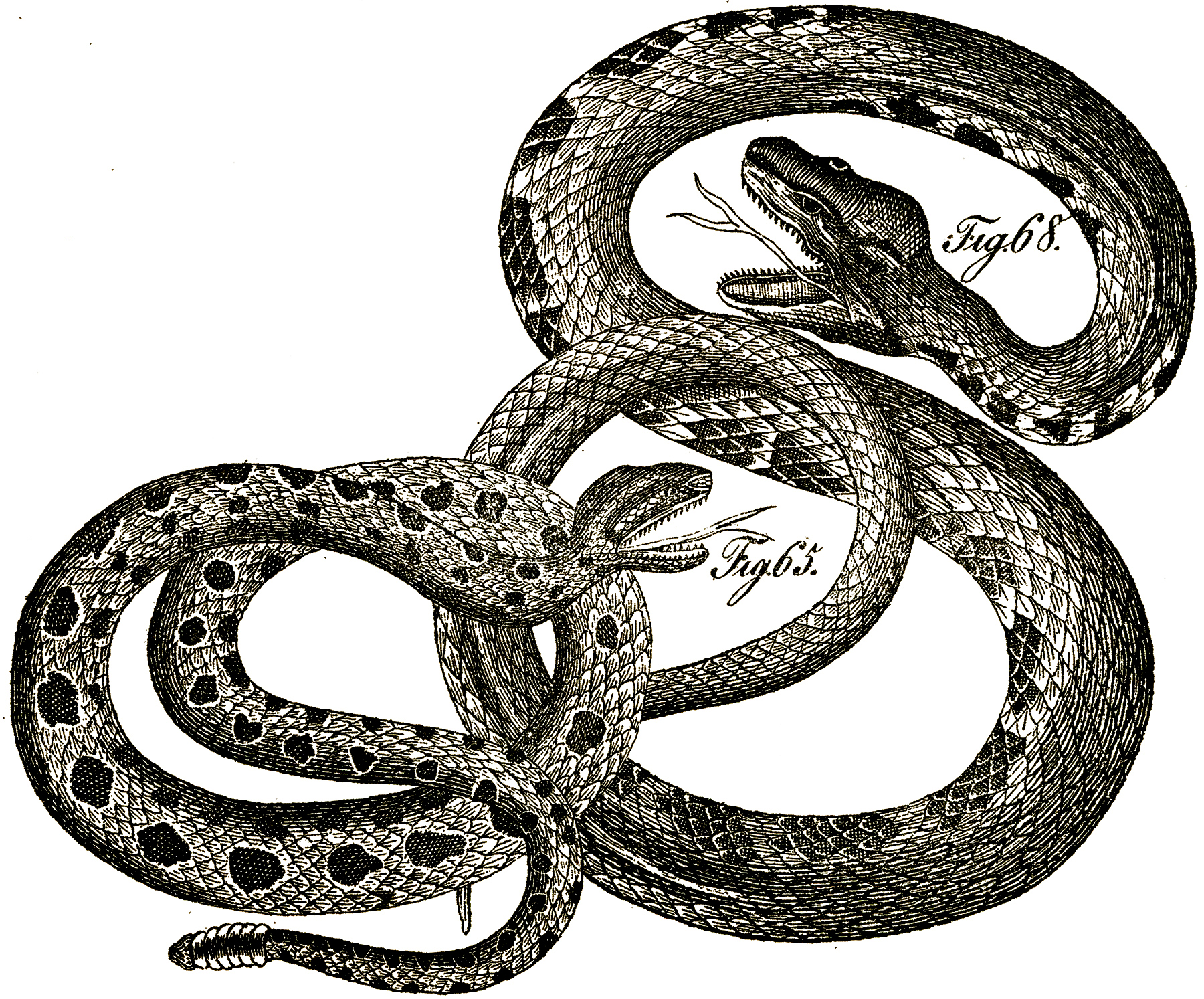
Fashioned into a coiled snake eating its tail, the 18kt gold ring is replete with black enamel scales and cabochon ruby eyes. A detailed engraving on the inside of the band reads: “In Memory of N, M, de Rothschild, Died 28th July 1836. Aged 59, Hallmarked London, 1836, finger size N.”
In 1811, Mr. Rothschild established N M Rothschild & Sons, a multinational investment banking company in London. Having already amassed a significant fortune in the early 1800s, Rothschild was able to fully lend his support to the British efforts during the Napoleonic Wars.
 |
| Nathan Meyer (Mayer) de Rothschild Copyright unknown Photo Source: And Yet They Deny |
It is fitting that a man so true to his country and so loyal to his family would have a ring fashioned in his honor after his death. Given that Mr. Rothschild was an active and loyal Freemason, the serpent ring may have been designed by his brotherhood on his behalf.
Given that the snake is coiled with its tail in its mouth, this is a reasonable conclusion. This symbol, sometimes called the Ouroboros (“he who eats the tail”), is commonly associated with Freemasonry and represents the cycle of life, death, and rebirth - a cycle that ultimately leads to immortality.
BIBLIOGRAPHY
1. Alderman, Geoffrey. Modern
British Jewry. Oxford: Oxford University
Press, 1998.2. Kaplan, Herbert H. Nathan Mayer Rothschild and the Creation of a Dynasty: The Critical Years, 1806-1816. Stanford: Stanford University Press, 2006.
3. Meij, W.B. Harold. “Symbolism of the Snake.” The Masonic Trowel, accessed January 30, 2013.
4. “Ouroboros.” Crystal Links, accessed January 30, 2013. http://www.crystalinks.com/ouroboros.html.
5. Saladin F. The Babylonian Code – Vol. One: The Unholy Scriptures. Norderstedt Germany: GRIN Verlag, 2011.
6. “Sale 8127/Lot 183.” Christie’s, accessed January 30, 2013. http://www.christies.com/lotfinder/jewelry/a-19th-century-18ct-gold-ruby-and-5647979-details.aspx.
*Clip art courtesy of The Graphics Fairy
Subscribe to:
Posts (Atom)